Friday, October 12, 2007

Sabaleta


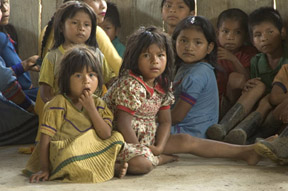
Sabaleta—an Embera-Chamí community in the "highway" district


Last weekend I was privileged to make a five-day visit to Sabaleta, a community I had seen previously from “the Trocha.” Below I’m going to use this visit to touch on a theme of mine—the problems of cross-cultural communication, and particularly the importance of not assuming you know what you’re looking at, or what it means.


But first, a few words about the community. The Chamí are one of the three ethnic groups that comprise the Embera in Colombia. The name refers to water springs, and is drawn from the Chamí’s original area, in the department of Risaralda, and especially around the community of San Atnonio de Chamí. From that area, mostly in the last two centuries, the people have spread into other departments—Antioquia, Valle del Cauca, Caldas, Putamayo, and of course, El Chocó. Although in reality there are only two communities in this department.

The Embera-Chamí of Sabaleta first came here around 1880—in the same period that Guadguas, not that far away, was being settled. The immediate cause was the violence of that epoch (unfortunately, for most of Colombian history, it would not be wrong to refer to “the violence of that epoch”). They settled in this area, not far from a number of Embera-Katío communities.

The community has grown considerably in recent years. I was told that 35 years ago, they had twelve families and 33 residents. Today, there are 98 families, of whom about 90 live in or very near the caserío, or settlement, and nearly 500 people. About 30 years ago, a group left and founded El 20, the only other Chamí community in the area.

Violence has had other effects on he community. I was told that the folks here abandoned the worship of the god Caracabí (known as Alcolé—the great father) only a generation ago, in response to the work of priests in attending to and comforting the victims.

Compared to the other Embera communities along the trocha, Sabaleta is quite “acculturated.” Almost all the people speak good Spanish, including women and little kids; really it’s a truly bilingual community. Many, if not all, the adults are high-school graduates. Women are active and outspoken in the community. The clothing they wear is very mixed, and heavily “western”-influenced—you don’t see anyone wearing the “paruma” (wrap-around skirt that is the only article of clothing for more traditional Embera women). But there are great mixtures: women wearing pants but carrying heavy loads of firewood or plátanos in traditional baskets with head-straps. But one of the teachers in the school told me that the village she comes from, in Antioquia, is much more “acculturated,” as all, not just a few, of the houses are of blocks and cement, and people have refrigerators and TVs in their houses. But they still speak Embera padea at home.

The people in Sabaleta were very welcoming, and I certainly had a wonderful visit—I hope to write more about them in the future. But for now, the question about understanding what you see…

Here’s an example. Right in the middle of the caserío there’s a row of ten houses that are different from the rest. They are attached, for one thing. They are not elevated. And most are of block or mixed block and wood construction, rather than the traditional wood.

So here are a couple of questions that might arise, if you think to ask:

1) Why are these houses made like this?

2) While we’re on the topic, is the caserío laid out in a traditional way?

The danger—the trap—is to try to understand these questions simply by looking. (I’m not creating an easy target here—I’ve seen lots of visitors in towns and villages in Latin America do just that). But the information is not on the surface; you can’t understand by looking. You have to ask. This may seem obvious, but as I said, my experience tells me that it bears repeating. And especially when we think about photography, which tends by the very nature of the medium to promote the idea that all the information we need is already in front of us. But this is rarely the case, and certainly not so here.

The row of houses were built in 1997 by a project, apparently arranged by the municipal government, and I was told that although the people were consulted before construction began about what they wanted, they were surprised to see attached houses. I heard conflicting stories about whether they have adjusted to them or not.

In any event, they hadn’t been in them very long when in 198 the paramilitaries gave the people 24 hours to abandon the area. At that time, there was no caserío; the people lived in their traditional manner spread out through the mountains, on their fincas. People headed for the hills, and were able to send a commission to El Carmen, and the municipio sent vehicles to get them. In the meantime, the paracos killed two students!

They stayed in El Carmen for six months before they could return. This was hard on them. For one thing, they traditionally did not live in a capitalist culture—they didn’t buy their food, they grew it—and in El Carmen, they had to buy everything, but didn’t have incomes.

When they were able to return, they decided—this was a position of the regional indigenous organization, OREWA—that for greater security and unity, as well as to develop communal programs, it would be better to live closer. In an area that had been pasture, they created the caserío with help from Catholic Relief Service (CRS), who financed the houses.

So, there are answers to the questions, but they don’t come simply from looking.


Sabaleta—una comunidad embera-chamí en la zona de la "carretera."

El fin de semana pasado tuve el privilegio de visitar Sabaleta por cinco días. Es un comunidad que había visto antes desde “la Trocha.” Más tarde, aprovecharé esta visita para tocar un tema mío—los problemas de comunicación a través de las culturas, y especialmente la importancia de no presumir que sabes lo que es que miras, ni que sabes lo que significa.

Pero primero unas palabras sobre la comunidad. Los chamí son uno de las tres etnias que conforman los embera en Colombia. El nombre hace referencia a nacimiento de agua, y viene de la zona original de los chamí, en el departamento de Risaralda, y especialmente la comunidad de San Antonio de Chamí. Desde esa zona, más que nada en los últimos dos siglos, la gente se trasladaba hacia otros departamentos—Antioquia, Valle del Cauca, Caldas, Putamayo y, por supuesto, El Chocó. Aunque en realidad solo hay dos comunidades en este departamento.

Los embera-chamí de Sabaleta llegó acá alrededor del 1880—en el mismo período que fue fundada Guaduas, que queda no muy lejos. El motivo inmediato fue la violencia de aquella época (desafortunadamente, por gran parte de la historia de Colombia, no sería equivocación referirse a “la violencia de aquella época”). Se instalaron en este área, no muy lejos de unas comunidades embera-katío.

La comunidad ha crecido notablemente en los últimos años. Me dijeron que hace 35 años había doce familias y 33 habitantes. Ahora son unas 98 familias, de las cuales 90 viven en o muy cerca al caserío, y casi 500 personas. Hace unos 30 años, un grupo salió y fundó El 20, el único otra comunidad chamí en la zona.

La violencia ha tenido otras consecuencias para la comunidad. Me dijeron que la gente acá dejo de adorar el dios Caracabí (conocido como Alcolé—el gran padre) solo hace una generación, como resultado del trabajo de los curas al atender y consolar las víctimas.

Comparada a las demás comunidades embera por la trocha, Sabaleta es mucho más “aculturizada.” Casi todos hablan buen español, incluyendo mujeres y niños pequeños; de hecho es una comunidad bilingüe. Muchos, si no todos, de los adultos son bachilleres. Las mujeres son activos y francas en la comunidad. La ropa que llevan es muy variada, con una influencia fuerte “occidental”—no ves a nadie en “paruma” (la falda que es el único artículo de ropa para mujeres embera más tradicionales). Pero hay mezclas muy buenas: mujeres en pantalón pero cargando bultos pesados de leña o plátano en canastas tradicionales con correas de cabeza. Pero una de los profes me dijo que el pueblo de donde viene, en Antioquia, es mucho más “aculturizada,” como todas, no solo unas cuantas, de las casas son de bloque y cemento, y la gente tiene neveras y televisores en la casa. Pero sigue hablando embera padea en la casa.


La gente de Sabaleta era muy acogedora, y efectivamente tuve una visita maravillosa—espero escribir meas sobre ellos en el futuro. Pero por el momento, sobre el tema de entender lo que ves…
Aquí hay un ejemplo. Justo en medio del caserío hay una fila de diez casas que son distintas de las demás. Son pegadas por una cosa. No son elevadas. Y la mayoría son de bloque o una mezcla de bloque y madera, en lugar de la madera tradicional.

Entonces, acá hay un par de preguntas que pueden surgir, si se te ocurre preguntar:

1) ¿Por qué fueron estas casas hechas así?

2) Mientras estamos en el tema, ¿la caserío tiene plan tradicional?

El peligro—el escollo—es intentar entender estas preguntas por observar nomás. (No vengo creando un banco fácil acá—He visto bastante visitantes en pueblos y caseríos en América Latina hacer precisamente eso). Pero la información no está en la superficie; no puedes entender por observar. Debes preguntar. Esto puede parecer obvio, pero como dije, mi experiencia me dice que cabe volver a decirlo. Y sobre todo cuando pensamos en la fotografía, que tiende por la naturaleza del medio a promover la idea que toda la información que nos hace falta ya está delante de nosotros. Pero rara vez es cierto, y de hecho no lo es acá.

Las casas en la fila fueron construidas en 1997 por un proyecto, aparentemente arreglado por la alcaldía. Me dijeron que, aunque hubo una consulta previa con la gente para ver que quería la gente, quedaron sorprendidos a ver casa pegadas. Escuché distintos cuentos sobre si o no la gente ya ha adaptado a ellas.

De toda forma, no las habían ocupado mucho tiempo cando en 1998 los paramilitares dijeron que la gente tenía 24 horas para abandonar la zona. En aquel entonces, no había caserío; la gente vivía regada por la montaña, en sus fincas, La gente huyo al monte, y logró mandr una comisión a El carmen, y el municipio mandó vehículos para traerlos. Mientras tanto, ¡los paracos mataron a dos estudiantes!

Quedaron en El Carmen por seis meses antes que pudieran volver. Esto les costó trabajo. Por un lado, no habían vivido tradicionalmente en una cultura capitalista—no compraron sus alimentos, los sembraron—y en El carmen tenían que comprarlo todo, pero no tuvieron ingresos.

Cuando les resultó posible retornar, decidieron—esta fue la posición de la organización indígena regional, OREWA—que ara tener meas seguridad y unidad, además para desarrollar programas comunales, sería mejor vivir meas cerca. In un lugar que había sido potrero, crearon el caserío con ayuda de Catholic Relief Service (CRS), que financió las casas.

Pues, hay respuestas a las preguntas, pero no se encuentran simplemente por mirar.

La Mula y Yo


A continuación un cuento que escribí en forma de un mail hace rato, que pienso que todavía puede divertir un poco a Uds:

(English-speaking friends: some folks here encouraged me to post this story, but right now I don’t have time to translate it—that will come later. Sorry…)

Querid@s Amig@s,

Quisiera compartir con Uds. un cuento algo chistoso—algo que me pasó durante una visita al Chocó. No todo debe ser pesado.

El Domingo de los Ramos, fui con un pequeño grupo a visitar la zona del Alto Andágueda, una zona muy remota del Chocó, area de resguardo indígena, donde hay una docena de comunidades de los embera-katío. En marzo, había habido un atropello muy serio de parte del ejército nacional, en que mataron a un niño de 12 añitos e hirieron a varias personas. Parte de la misión fue trabajar con una compañera abogada de derechos humanos, sacando testimonios y hasta haciendo simulacros de los eventos con la gente, yo sacando fotos, por supuesto.

Para llegar a la comunidad de Aguasal, fuimos en carro a un pueblito, Águitas, en el vecino departamento de Risaralda, un viaje de unos 5 horas. Desde ahí, caminamos montaña arriba para la comunidad de Aguasal. Para los que viven en la zona, es normalmente una caminata de 4-5 horas. Para mi, y la abogada, no acostumbrados, nos costó 8 horas—en parte, porque pasamos mucho tiempo luchando con un caballo de lo más perezoso. La Liliana empezó montada, y pasó la mayor parte de la caminata así, pero a veces tuvimos que jalarlo, empujarlo, y no sé que más. Yo monté por el recto final.

Me sentí algo mal, pues culpable; a uno le cae mal sentirse carga a los compañeros. Ellos me dijeron que no, que no me preocupara, pero lo que realmente me convenció fue cuando una compañera que ya está trabajando en Aguasal, una hermana religiosa más joven (aún más joven) que yo, me dijo, “No Steve, la verdad es que cuando subí por primera vez hace un año, por poco no llego. En medio camino estaba acabada, quería volver, no creía que jamás iba a llegar. Pero ya, después de un año de bajar y subir cada quince días, lo hago en cuatro o cinco horas.”

Pues, pasé el lunes y martes trabajando—sacando fotos en la comunidad, conociendo a mucha gente, trabajando con Liliana. Todo bien. Pero el miércoles vino lo que va a motivar el cuento “algo chistoso” (no se asusten, llegaré). Teníamos planeado unas salidas en dos grupos más pequeños para comunidades más arriba, pero amanecí enfermo. No les aburro con detalles, al volver a Quibdó consulté una medico de mucha confianza que me dijo, “Steve, te deshidrataste profundamente.”

“Pero Pilar, anduve tomando mucha agua y gaseosas en las comunidades.”

“Sí, quiere decir que te repusiste líquidos y energía, pero no te repusiste electrolitos.”

El resultado fue que perdí el miércoles y una parte del jueves. El viernes volví a trabajar, aunque con una flojera corporal notable, y el sábado estuve ya trabajando. El domingo (la Pascua) bajábamos. Nuestro responsable, el P. Chucho (el apodo por Jesús en Colombia) me dijo, “Steve, te vas a bajar montado en bestia.” Traté de discutir, diciendo que ya tenía fuerza, pero insistió, y creo que con razón.

Ya llegamos al tema. Un arriero—Benjamín—llegó temprano con dos mulas, una para los bultos y otro con montura para su humilde servidor. Hasta allí, bien. El problema fue que esa mula, terca como son de fama, no me quería para nada. Salimos bien de la comunidad, pero al acercarnos a la primera quebrada, a unos 50 metros, se puso los frenos. Ni yo ni Benjamín podía moverla. Bien. Desmonté y crucé jalándola por la soga que servía de cabestro y rienda.

Al otro lado de la quebrada, estaba un poco más dispuesta a cargarme, aunque con evidentes malas ganas. A ratos me hizo caso en cuanto a la caminata, otras veces me hizo caso omiso.

Lo chistoso fue que hubo una competencia entre las dos mulas. Cada una quería estar adelante todo el tiempo. Fue cosa seria para ellas, trataron de ganarse una a la otra, de adelantarse cada vez que se les presentó oportunidad, pues una competencia de verdad. Cada vez que pasamos por una comunidad, que quiere decir cada vez que el camino se amplió, empezaronn a galopar, en una carrera para ganar antes de entrar de nuevo al camino estrecho.

(Hubo momento en que cruzamos una comunidad más grande, Cevedé. Jueves Santo, Viernes y Sábado Santo, y sobre todo la Pascua son en esas comunidades días de borrachera. En Cevedé, aunque no hubiera pasado las 9 o 10 de la mañana, todo el pueblo estaba borracho, la gran mayoría “bailando” en el centro comunitario. Salieron unos jóvenes, y al mirarme a mí caminando al lado de la mula, uno dice, “Déjeme montar su bestia.” Lo único que faltaba fue que un borracho montase la mula, pues le dije que mejor no. Empieza a gritar, “Mala GENTE! Hijo de PUTA!” De hecho, no me gusta meterme con borrachos…)

Bueno, como decía, cuando estaba adelante, la mula mía estaba más contenta y más o menos me hacía caso. Benjamín andaba atrás con la otra, y con su hijito. Pero cada vez que la otra adelantó, la mía volvió a ponerse los frenos, y simplemente no caminaba, ni para mi, ni para B. Yo la entendía perfectamente. Decía ella: “¡No!, Así atrás, ¡ni un paso más con este gringo de mierda a mi espalda!”

Cada vez, tuve que desmontar y caminar con ella—y no mucho por que hasta caminar conmigo en aquellas condiciones le cayó mal—hasta que B. pudiera adelantar, coger la otra, y mantenerla pa’ que yo pasara y volviera a montar.

Eso pasó varias veces, además de las veces que tenía que desmontar porque la bendita mula no iba a cruzar una quebrada conmigo, o porque simplemente se aburría de cargarme.

Finalmente llegamos salvo y sano a Águitas. Hoy me doy cuenta que nunca conocí el nombre de la mula. ¿Acaso el problema fue falta de cortesía de parte mía?


Muchos saludos,

Steve

PD. Dentro de poco, espero subir más fotos a pbase, incluyendo imágenes del Alto Andágueda. Mientras tanto, adjunto una fotica de la mula, que claramente me está diciendo, “¡Olvídatelo, gringo! ¡deja de joderme!”


Tuesday, October 2, 2007

A visit to Guaduas, in El Carmen de Atrato / Una Visita a Guaduas, en El Carmen de Atrato

(I’m in El Chocó and Colombia as a photographer, not as a writer, so it may seem a little ironic that I don’t have any pictures of the area and the people I’m describing in these entries. But I’m simply falling behind in processing the many pictures I’m taking, and even more so since I have been spending major time on the activities of the Fiesta de San Pacho since returning to Quibdó—more on San Pacho will be coming soon—well, relatively soon. As soon as I can, I’ll add some pictures of Guaduas and the Guadueños.

Estoy en Colombia y El Chocó como fotógrafo, no como escritor, por el cual puede parecer algo irónico que no he puesto fotos de la zona y la gente que describo en estas entradas. Pero la simple verdad es que me estoy atrasando en procesar las muchas fotos que estoy sacando, y aún más por cometer mucho tiempo a las actividades de las Fiestas San Pacho desde que volví a Quibdo—más sobre San Pacho viene pronto—pues relativamente pronto. En cuanto pueda, agrego unas fotos de Guaduas y los guadueños.)

Crying for Emma Lazarus


Sometimes, something happens to help you realize how just below the surface emotions are building up. I just returned from a ten-day visit to the municipio of El Carmen de Atrato—the main mission was a five-day visit to the vereda of Guaduas—part of a commission of the Diocese of Quibdó. Part of our mission, and my primary task, was to help launch a program of recovering historical memory. This is a large part of what I’m doing in Colombia on this visit.

Guaduas is a fascinating place, with a moving 130-year history that in the last nearly twenty years includes violence at the hands of all the armed groups, displacement of the entire community in 1998 (one of the first massive forced displacements in the history of the current conflict), and now a process of returning. It’s a painful, difficult and moving history, and the Guadueños are impressive people, hard-working, welcoming and optimistic.

I intend to write more about this community, but for the moment, I’ll just tell this story:

One day we walked a couple of hours up one of the mountains, to visit one family in their provisional house, and look at the ruins of other places—all had been burned by the paramilitaries in 1998.

At the house of the people we were visiting, one of the diocesan workers asked me about the Statue of Liberty. I told them about the collection to build the base, and I talked a little about Emma Lazarus and her poem, “The New Colossus.” I’ve been thinking for a while about the relevance of that poem in light of the current anti-immigrant feelings growing in the US. I struggled a little both to remember the poem and to translate it. But halfway through, I had to quit, because I became very emotional and started to cry—the poem had released a lot of feelings for the people around me that had been building up in me these days…

Llorar por Emma Lazarus

A veces algo sucede que te ayuda dar cuenta como apenas debajo de la superficie están creciendo. Acabo de volver de una visita de diez días al municipio de El Carmen de Atrato—la misión central fue una visita a la vereda de Guaduas por cinco días—como miembro de una comisión de la Diócesis de Quibdó. Parte de nuestra misión, y mi tarea principal, fue ayudar en arrancar un programa de rescate de memoria histórica. Esto es parte importante de lo que estoy haciendo en Colombia durante esta visita.

Guaduas es un lugar fascinante, con una historia conmovedor de 130 años la cual en los últimos casi incluye violencia por parte de todos los grupos armados, desplazamiento de la comunidad entera en 1998 (uno de los primeros desplazamientos forzados masivos en la historia del conflicto actual), y ahora proceso de retorno. Es una historia dolorosa, difícil y conmovedor, y los guadueños son gente impresionante, trabajadora, acogedora y optimista.
Espero escribir más sobre esta comunidad, pero por el momento, solo contaré esta historia:

Un día caminamos unas horas montaña arriba, para visitar una familia en su casa provisional, y observar las ruinas de otras casas—todas fueron quemadas por los paramilitares en 1998.
En la casa de la gente que visitamos, uno de los trabajadores diocesanos me pregunto sobre la Estatua de la Libertad. Les conté lo de la recolección para construir la base, y hablé un poco sobre Emma Lazarus y el poema suyo, “El Nuevo Coloso.” Ya hace rato que vengo pensando sobre la relevancia de ese poema ante el actual crecimiento de sentimientos anti-inmigrante en EEUU. Luché un poco para recordar el poema y para traducirlo. Pero a la mitad, tuve que dejar de hacerlo, como me emocioné mucho y empecé a llorar—el poema había desatado muchos sentimientos por la gente en mi alrededor que se me habían estado creciendo en estos días….

A Little About Guaduas

One of the outstanding features of Guaduas is how stunningly beautiful the place itself is. From the road between Quibdó and El Carmen (“la trocha”), you first have to cross the Río Atrato. This is not as easy as it should be, as the paracos also blew up the bridge. A wooden bridge serves provisionally, but this means that cars and trucks can’t enter. The five of us and our luggage and gear arrived in one of the old jeeps that serve as taxis in El Carmen, and a group of Guadueños with luggage and food they had bought in the town in another. There is a car on the other side, and we loaded all the luggage on top and all the people inside (a couple hanging on outside), and took off under a mountain rain for an hour’s ride over a winding mountain trail through beautiful country, until we arrived at the canyon of the Río Guaduas.

The territory of the vereda is a real paradise. A beautiful, strong, river fed by numerous equally attractive quebradas runs between a number of low mountains (we’re in the western foothills of the Andes here) covered with exuberant sub-tropical forest. In the lower areas, and moving up the mountains, are the pastures for the beef cattle that are the main economic activity of the people here (though to date few cattle have been reintroduced), as well as banana plantations, and stands of yucca, corn and fruit trees.

Guaduas was settled about 1880 by Juan María Sánchez and his wife, Eulalia Gallego. They had lots of kids, who stayed and extended the area of the vereda. They were joined by other families called Velásquez, Cano, Moncada, Cardona, Restrepo, and others. Early in the 20th Century, Afro-Colombian families from the area of the Río Capá in Medio Atrato with names like Rentería and Martínez came into the area as workers, and stayed and became part of the community.

The community of Guaduas has a strong sense of history and great feeling of unity, based in large part on the close family connections among all of them. A combination of a hard-working community and very good land resulted in a vereda that was quite successful, where most of the people lived relatively well. They were educated (schools within the vereda went to the fifth grade—one of the teachers was our host and guide during out visit—and most young people finished their studies in school in the town of El Carmen), and most families had a gasoline-powered generator at the house.

In the 1980s and 90s, the people here began to feel serious pressures as a result of the conflict. The guerrilla forces had been in the area for a long time, but in the late 90s there were conflicts between the community and the guerrillas that resulted in the guerrillas mistreating and killing two young people. This within the context of the mistreatment and pressures from the army and police, who considered the vereda a guerrilla haven. In this period in El Carmen de Atrato, having the family name of Sánchez was reason enough to be abused or arrested by the police.

By the late 90´s, the situation in the area had become critical. Along the trocha, families (primarily mestizos and Afro-Colombians) were directly threatened by the increasing numbers of paramilitaries, or felt they had no choice but to leave. There were many deaths and disappearances in the area. In mid-1998, the Embera-Chamí community of Sabaleta was forced to move as a group to the town of El Carmen for six months (I expect to visit Sabaleta in the near future).

In the same year, human rights workers of the Diocese of Quibdó learned that the paramilitaries were planning to go through Guaduas and massacre the residents. As a result of the tensions, some people had left in the previous period, but now the diocese organized a massive evacuation of the community, not an easy task in an area where families live dispersed throughout the mountains. But it was accomplished, and doubtless saved many lives. The paracos moved through the vereda to drive out the guerrillas, and in the process killed the handful of people who had not left, as well as burning all the houses they could and killing the horses, mules and cattle left behind.

About three years ago, people started to return in an organized way. The tasks were enormous—the houses had been destroyed, the pastures were overgrown by weeds and trees up to about 8-9 feet, the internal road was gone, the bridge connecting them to the main road had been destroyed. At first, just a few people moved back, sometimes just the parents of a family, or even just the husband/father, while the rest of the family spent most of their time in town, working and going to school.

The return was not something that happened willy-nilly, but the result of serious planning. Help was sought and found for rebuilding houses, though the programs are moving slowly and encounter some obstacles—a major one is the bridge, which is necessary to move construction materials into the area.

Early in the process, diocesan workers suggested to the people that they create a caserío—a group of houses—rather than rebuilding houses scattered throughout the mountains. This would have made the process of rebuilding a lot easier, but it was rejected by the people. They wanted to return to their history, their culture, of living as family units on their fincas, near their animals. On the one hand, living in a caserío would have meant a daily trip up to the fincas to tend to the animals, milk the dairy cows, and carry out whatever other work was necessary. And on the other hand, they prefer the tranquility and solitude of living out on their own land, not close to other people. From most of the houses we visited, you can see another house off in the distance, but not from all of them.

But this does mean that to get to most of the houses, you have to walk long distances, mostly over mountain tracks and through mud and muck. And as I said to one women who lives in an isolated house not even near the internal road, this means that every pound of rice, every piece of lumber, every tool, has to be carried, sometimes on mule- or horse-back, but often on human shoulders, all the way up to the house. Yes, she agreed, but it’s worth it to us.

Un Poco Sobre Guaduas

Uno de los aspectos sobresalientes de Guaduas es que el lugar en si tiene una belleza asombradora. Desde el camino entre Quibdo y El Carmen (“la trocha”), primero tienes que cruzar el Río Atrato. Esto no es lo fácil que debe de ser, ya que los paracos también volaron el puente. Hay un puente de madera que sirve provisionalmente, pero esto quiere decir que no pueden entrar carros o camiones. Los cinco de nosotros/as, con les maletas y equipos, llegamos en uno de los viejos Willys que trabajan como taxis en El Carmen, y un grupo de guadueños con su equipaje y alimentos que habían comprado en el pueblo llegaron en otro. Hay un carro en el otro lado, y cargamos todo el equipaje en la parilla y todas las gentes adentro (pues, unos colgados), y arrancamos bajo una lluvia de la montaña por un viaje de una hora en un camino sinuoso de la montaña, por un escenario campestre bello, hasta llegar al cañón del Río Guaduas.

El territorio de la vereda es un verdadero paraíso. Un río bonito y fuerte, alimentado por numerosas quebradas iguales de atractivas corre entre unas montañas bajas (aquí estamos en las faldas occidentales de los Andes) y cubiertas de una selva sub-tropical exuberante. En las bajadas, y subiendo las montañas, hay potreros para los reces de engorde que son la principal actividad económica para la gente acá (aunque hasta la fecha pocos reces han sido reintroducidos), además de platanales y siembras de yuca y maíz, y frutales.

Guaduas fue fundada alrededor de 1880 por Juan María Sánchez y su esposa Eulalia Gallego. Tuvieron muchos hijos, que se quedaron y extendieron el área de la vereda. A ellos se unieron otras familias con apellidos como Velásquez, Cano, Moncada, Cardona, Restrepo, entre otros. En principios del siglo XX, familias afro-colombianos de la zona del Río Capá en Medio Atrato con apellidos como Rentería y Martínez subieron a la zona como trabajadores, y se quedaron y se hicieron parte de la comunidad.

La comunidad de Guaduas tiene un sentido fuerte de la historia y un gran sentimiento de unidad, basados en gran parte en los lazos familiares cercanos entre todos. Una combinación de una comunidad muy trabajadora y tierra muy buena dio por resultado una vereda que fue bastante exitosa, donde la mayoría de la gente vivía relativamente bien. Eran educados (las escuelas dentro de la vereda enseñaron hasta quinto grado—uno de los profesores era anfitrión y guía nuestro durante la visita—y la mayoría de los jóvenes terminaron sus estudios en el pueblo de El Carmen), y la mayoría de las familias tenían plantas eléctricas a la casa.

En los años 80 y 90, la gente acá empezó a sentir presiones serias como resultado del conflicto. La guerrilla había estado en la zona ya hacía tiempo, pero en finales de los 90 hubo conflictos entre la comunidad y la guerrilla que terminaron en que la guerrilla maltratara y matara a dos jóvenes. Eso dentro del contexto del maltrato y presiones del ejército y la policía, quiénes vieron a la vereda como asilo guerrillero. En este período en El Carmen de Atrato bastaba con llevar el apellido de Sánchez par que la policía abusara o arrestara a uno.

En los finales de los 90, la situación se había vuelto crítica. En la trocha, familias (generalmente mestizas y afro-colombianas) o recibieron amenazas directas de parte de las cantidades crecientes de paramilitares, o sentían que no les quedaba más alternativa que salir. Hubo muchos muertos y desaparecidos en la zona. En medianos de 1998 la comunidad embera-chamí de Sabaleta se vieron obligados a desplazarse en comunidad al pueblo de El Carmen por seis meses (espero visitar a Sabaleta pronto).

En el mismo año, trabajadores de derechos humanos en la Diócesis de Quibdo se dieron cuenta que los paracos tenían planes de andar por Guaduas y masacrar a los habitantes. Como resultado de las presiones, algunas personas se habían ido previamente, pero ahora la diócesis organizó una evacuación masiva de la comunidad, cosa nada fácil en un área donde las familias viven dispersas por la montaña. Pero se logró, y sin duda se salvaron muchas vidas. Los paracos pasaron a través de la vereda para correr a la guerrilla, y al hacerlo mataron a las pocas personas que no habían salido, además de quemar todas las casas que podían y matar a las bestias y ganado que se habían quedado.

Hace aproximadamente tres años, la gente empezó a retornar de manera organizada. La tareas eran tremendas—las casa se habían destruidos, los potreros llenos de monte y árboles hasta 3 metros de altura, la carretera interna se había perdido, el puente que había sido el lazo con la carretera principal se había destruido. En un principio, solo retornaron unas pocas personas, a veces solo los padres de una familia, o incluso solo el esposo/padre, mientras el resto de la familia paso la mayoría de su tiempo en el pueblo, trabajando y estudiando.

El retorno no sucedió así no más, sino que fue resultado de planes serios. Se buscó y se encontró apoyo para la reconstrucción de las casas, aunque los programas se adelantan muy lentos y encuentran unos obstáculos—uno muy grande es el puente, que les hace falta para llevar materiales de construcción a la zona.

Temprano en el proceso, trabajadores diocesanos sugirieron que se crease un caserío en lugar de reconstruir casa regadas por la montaña. Eso habría hecho el proceso de reconstrucción más ágil, pero fue rechazado por la gente. Querían volver a su historia, a su cultura, de vivir en familia en sus fincas, cerca a los animales. Por un lado, vivir en caserío habría hecho necesario ir todos los días a los fincas para cuidar los animales, ordeñar las vacas lecheras, y realizar cualquier otro trabajo que fuera necesario. Y por otro lado, prefieren la tranquilidad y la soledad de vivir en tierra propia, y no estar cerca de la demás gente. Desde la mayoría de las casa que visitamos, puedes ver otra casa allá lejos, pero no desde todas.

Sin embargo, efectivamente quiere decir que para llegar a la mayoría de las casas, debes caminar largas distancias, mas que nada por senderos de la montaña y a través de bastante pantano y barro. Y como decía yo a una señora que vive en una casa aislada, ni siquiera cerca de la carretera interna, eso quiere decir que cada libra de arroz, cada tabla de madera, cada herramienta debe subirse, a veces sobre mula o caballo, pero muchas veces sobre hombros humanos, todo el trecho a la casa. Sí, dijo, pero para nosotros vale la pena.

More on food—and vitamins

I’ve been meaning to write some more about food—including my own diet here—and the visit to Guaduas provides an occasion. One of the real treats here is arepa de choclo (or chocolo—both forms exist) con quesito. Arepa is very similar to what in Mexico, or even more in Central America would be called a tortilla, though it comes in more varieties—sometimes it’s like a small bread, other times it’s deep fried. I’ve had arepas in Venezuela and Colombia; I don’t know if they are part of other Andean cultures.

The normal arepa here is made with a fine corn dough, like the dough of Central American tortillas, usually made flat and round, the size of a salad plate, though sometimes as a small ball. It commonly accompanies any meal, though especially breakfast. The arepa de choclo is made from a coarse dough—really it’s only corn kernels ground once and kneaded with a little water and a little sugar, like corn muffins in the states, then grilled with a little oil. It has a rich sweet corn taste. I’ve had a version of them in Quibdó, and that version is very common on the streets of Bogotá, smaller and usually with a melted cheese filling. But none have been as delicious as the Guadense arepa de choclo.

Quesito is a mild, light white cheese. I’ve had both homemade and commercial quesito in Guaguas, made without the excess salt that—for me—ruins too much of the cheese here (the truth is, I’ve seen women in Quibdó buying cheese and interrogating the vendors about whether the cheese is too salty). A breakfast of arepa de choclo and quesito, accompanied by coffee, black (which is called “tinto” (ink) in Colombia) or with milk fresh from the cow, or hot chocolate or agua panela (hot water in which has been dissolved panela—blocks of raw sugar) is a real treat.

From El Carmen de Atrato, to get to the house where your lumpen food critic woke up to among other things have such a breakfast you’ll have to take two car rides over terrible roads, more than 2 hours together, (crossing the provisional bridge over the Río Atrato on foot to get from one to the other) then another 2 hour walk or so over dirt road, mountain track and a lot of mud—but it’s worth it. (Of course, I had the same meal a couple of days later with Guadueños here in El Carmen, so I guess you might be able to skip the travel, but you’ll really be missing something.)

While I’m on the topic of food, here’s a question for nutritionists out there. My experience here is raising serious doubts about the role of vegetables in the diet. The people in Guaduas (like most of my friends in Quibdó, El Carmen or Bogotá)—who are healthy and very strong, with glowing skin ands hair and beautiful teeth, who walk the mountain tracks up and down twice as fast as I, all of this at least into their 60s and 70s, and some beyond—rarely eat vegetables. Their basic diet is: potatoes, yucca, bananas both green and ripe, corn, white rice, sugar, milk, some fruit (especially guava and citrus), a little meat and chicken and occasional eggs or beans. There is some variety, but that’s basically it.

The variety? Onions are grown everywhere, and are basically used a flavoring, along with some other herbs. Carrots and cabbage are sometimes grated into a very tasty salad, sometimes with some tomato slices, especially to accompany the equally delicious sancocho—essentially a soup of potatoes, yucca, bananas, and meat or chicken—but people don’t have sancocho every day, so they get substantially less than a portion of vegetables a day on average. And green vegetables are rarely seen. Since we’re further from the big rivers and the coast, there’s little in the way of fish, though they fish with hook and line for sabaleta in the river (they use the eggs of wasps that make their nests at the houses for bait, so the wasps are tolerated). Because it was raining so much when we were there, there was no fishing. And it seems like while we were there, the season began for ahuyama, a variety of what we would call winter squash—very big, with a nice orange meat. They’ve also appeared in Quibdó, and since I returned, I’ve had delicious soup of ahuyama a couple of times.

The food I’m describing is good; I like it a lot. And unlike other places, it isn’t all fried. But for me, the absence of vegetables is dramatic (I’ve checked the markets in El Carmen, and in truth there’s not much of a variety for sale there. But in Quibdó and much more in Bogotá, where the diet is similar—with the addition of lots of really good fish in Quibdó—there are good, relatively inexpensive vegetables available, which means of course that someone is buying them).

I’m not interested in imposing my diet on the people here, even if I could. And in fact, as I’ve said, I like the food here. But the question that stays with me is: Why aren’t the people here suffering from vitamin deficiency disorders?

Más sobre la comida—y vitaminas.

He querido escribir más sobre la comida—incluso sobre mi dieta acá—y la visita a Guaduas ofrece una posibilidad. Una de las verdaderas delicias acá es arepa de choclo (o “chocolo”—las dos formas existen) con quesito. Arepa es muy parecido a lo que en México, o aún más en América Central, se llamaría una tortilla, aunque se ve en más variedades—a veces es como un pancito, otras veces es frita. He comido arepas en Venezuela y Colombia; no sé si se ven en otras culturas andinas.

La arepa común aquí es hecha con un masa fina de maíz, como la masa de tortillas centroamericanas, por lo general plana y redonda, tamaño de una platilla de ensalada, aunque a veces como una pelota pequeña. Es común como acompañamiento a cualquier comida, pero sobre todo el desayuno. En cambio, la arepa de choclo es hecha de una masa tosca—de hecho, es nada más granos de maíz molido una vez y amasada con un poco de agua y un poco de azúcar, como los “corn muffins” de EEUU, y puesto en un sartén con un poco de aceite, Tiene un sabor rico y dulce de mías. He co ido otra versión de ellas en Quibdó, y esa versión es muy común en las calles de Bogotá, meas pequeña y normalmente rellena de queso fundido. Pero ninguna ha sido tan deliciosa como la arepa de choclo guadueña.

Quesito es un queso blanco muy suave. He comido quesito comercial y casero en Guaduas, hecho sin la sal excesiva que—para mi—destruye demasiado queso por acá (de hecho, he visto a señoras en Quibdo al comprar queso interrogar a los vendedores sobre si el queso tiene demasiada sal). Un desayuno de arepa de choclo y quesito acompañado de café, o tinto o con leche directa de la vaca, o chocolate o agua panela, es una verdadera delicia.

Desde El carmen de Atrato, para llegar a la casa donde tu crítico de comida lumpen amaneció para, entre otras cosas, desayunar así, te harán falta dos viajes en carro sobre carreteras tremendas, más de 2 horas juntos (cruzando el puente provisional sobre el Río Atrato para trasladarte de uno a otro), luego caminar otras 2 horas o más sobre camino de tierra, senderos de montaña y mucho pantano—pero vale la pena. (Pues, la verdad es que comí lo mismo unos días después con unos guadueños acá en El Carmen, por eso creo que puedes hacerlo sin el viaje, pero de hecho perderás algo muy lindo).

Mientras estoy en el tema de la comida, tengo una pregunta para l@s nutricionistas que puedan leer estas palabras. De mi experiencia acá, me está surgiendo una duda seria sobre el papel de las verduras en la dieta nuestra. La gente en Guaduas (como la mayoría de mis amig@s en Quibdo, El Carmen o Bogotá)—que gozan de buena salud y son muy fuertes, con la piel y el cabello luminosos y dientes lindos, que caminan los senderos de las montañas pa’ arriba y pa’ abajo a dos veces el paso mío, todo esto por lo menos en sus 60 y 70, y algunos más allá—rara vez comen verduras. La dieta básica es: papas, yuca, plátanos y bananos tanto verdes como maduros, maíz, arroz blanco, azúcar, leche, algo de frutas (sobre todo guayaba y cítricos), un poco de carne y pollo y de vez en cuando huevos o frijoles. Hay un poco de variedad más, pero básicamente eso es.

¿La variedad? Cebollas son sembradas por todo lado, y básicamente se ocupan para un poco de sabor, juntas con otras hierbas de cocina. Zanahorias y repollos son raspado, a veces, para hacer una ensalada muy sabrosa, a veces con tajadas de tomate, sobre todo para acompañar al sancocho igualmente delicioso. Pero la gente no toma sancocho cada día, pues por promedio consume mucho menos de una porción de verduras al día. Y verduras verdes se ven muy rara vez. Como son más lejos de los ríos grandes y l costa, hay relativamente poco pescado, aunque pesan el sabaleta en el río con anzuelo (usan los huevos de una avispa que hace sus nidos en las casas por carnada, por eso toleran la presencia de las avispas). Por que llovía tanto durante nuestra estadía, no pescaron. Y parece que durante nuestra visita empezó la temporada de ahuyama, una variedad de calabaza, bastante grande, con carne anaranjada buena. Desde que volví a Quibdo han aparecido acá también, y he tomado deliciosas cremas de ahuyama un par de veces.

La comida que describo es buena; me gusta mucho. Y al contrario de otros lugares, no es puro frito. Pero a mi ver, la ausencia de verduras es dramático (he echando un vistazo los mercados en El Carmen, y de hecho no hay mucha variedad de verduras a la venta allá. Pero en Quibdo, y mucho más en Bogotá, donde la dieta es parecida—con la diferencia que hay mucho pescado realmente bueno en Quibdo—hay buenas y relativamente baratas verduras disponibles, el cual quiere decir por supuesto que alguien las está comprando).

No me interesaría imponer la dieta mía sobre la gente acá, aun si pudiera. Y de hecho, como decía, a mi me gusta la comida aquí. Pero la pregunta que se queda para mi es: ¿Por qué la gente de por acá no padece de males de deficiencias de vitaminas?

Monday, September 10, 2007

“Mongolian Buffet” in the El Dorado Airport / “Mongolian Buffet” en el Aeropuerto El Dorado

Once again I find myself in the Bogotá airport waiting for a flight to Quibdó, once again it’s lunchtime and once again I’m very hungry. But this time I decided to bypass all the typical grilled meat and try the “Mongolian Buffet.” As I approach, one of the workers comes out and shows me the special—a bowl of brown rice with lots of finely chopped sautéed vegetables, shrimp, chicken, beef and pork.

“Looks good, but could you make me one without the meat—no kind of meat?”
“Oh, vegetarian?’
“Please” (grinning)

He shows me to a seat, takes my drink order and goes off

The cook comes by.
“But do you want rice? A little rice?"
“Yes, just a little."
“Brown rice?”
You bet!

The drink is what’s called a “jugo natural” here—which means fruit juice, water and sugar. Often, they’re very sweet. I had ordered my favorite, lulo, and it came with very little sugar—perfect!

I asked the workers where the idea for a Mongolian restaurant had come from. It turns out that the owner is a woman who came here from the Philippines!

So, if you’re ever in need of lunch at the Bogotá airport, you have my recommendation. (Of course, keep in mind that I haven’t even tried the fancier restaurants). It isn’t cheap by my standards, but it is the international airport. In the future, your humble lumpen-gourmet will recommend places to eat in Quibdó as well…just in case, you never know.

“Mongolian Buffet” en el Aeropuerto El Dorado


Otra vez me encuentro en el Aeropuerto de Bogotá, otra vez es la hora del almuerzo, y otra vez tengo mucho hambre. Pero esta vez decido pasar las parilla típicas y probar el “Mongolian Buffet.” Al cercarme, uno de los trabajadores sale y me muestra la especialidad—un plato hondo de arroz integral con muchas verduras, camaroncitos, pollo, carne de res y puerco, todo picado y salteados.

—Se ve bonito, pero ¿pueden hacérmelo sin ninguna clase de carne?
—Ah, ¿vegetariano?
—¡por favor! (sonrisa muy abierta)

Me enseña asiento, saca el pedido de bebida, y se retira.

Llega el cocinero.

—Pero, ¿quiere arroz? ¿Un poco de arroz?
—Sí, un poco
—¿Arroz integral?
¡Segurísimo!

La bebida es lo que se llama "jugo natural” por acá—quiere decir zumo de fruta, agua y azúcar. Muchas veces son muy dulces. Había pedido mi favorito, lulo, y llegó con un poquito de azúcar—¡perfecto!

Pregunté a los trabajadores de dónde había surgido la idea de un restaurante mongol. Resulta que la dueña ¡viene de las Filipinas!

So si alguna vez te hace falta almuerzo en el aeropuerto de Bogotá, tienes mi recomendación. (desde luego, hay que tener presente que ni siquiera he probado las restaurantes de nivel más alto). No es barato según mis criterios, pero está en el aeropuerto internacional. En el futuro, tu gourmet-lumpen humilde va a recomendar lugares a comer en Quibdo también…por si acaso, nunca se sabe.

Sunday, September 9, 2007

I Finally Found a Thermometer / Por Fin Conseguí Termómetro

You may remember that I wasn’t able to find a thermometer in Quibdó to measure air temperature, so I couldn’t answer the common question, “How hot is it there?” I figured it wouldn’t be hard to find one in Bogotá, but in fact I had just about given up after visiting some really terrific hardware stores, and a few smaller shops.

Then, I was walking down the street and passed a shop that sells chemicals and other supplies to laboratories, and I thought, labs sometimes need to know the ambient temperature. I thought they would have something too technical and expensive for me, but decided to give it a try. In fact they had exactly two models, modest and quite inexpensive.

So I’ll go back to Quibdó equipped to try to estimate the temperature. If you have good eyes, perhaps you can see in the photo that it was about 17.5 degrees Celsius (63.5 Fahrenheit) in my room when I took the picture. Pretty typical, though some nights it gets colder.

Por Fin Conseguí Termómetro

Es posible que se acuerden que no podía encontrar termómetro en Quibdó para medir la temperatura ambiental, pues no podía contestar a la pregunta común--¿ Qué tan caliente es allá? Creía que no iba a ser difícil encontrar una en Bogotá, pero en realidad estaba por rendirme después de haber visitado unas ferreterías bonísimas, y unas más pequeñas..

Luego, caminaba en la calle cuando pasé una tienda que vende químicas y otros suministros a laboratorios, y pensé, los laboratorios a veces deben saber la temperatura ambiental. Creyó que tendrían algo demasiado técnico y demasiado caro, pero decidí intentarlo. Efectivamente, tenían precisamente dos modelos, modestos y baratos.

Pues vuelvo a Quibdo preparado a intentar estimar la temperatura. Si tienen ojos buenos quizás pueden ver en la foto que hacía 17.5 grado en mi cuarto cuando saqué la foto. Más o menos típico, aunque algunas noches hay más frío.

Another Face of Bogotá / Otra Cara de Bogotá

I’ve mostly been reporting on curiosities or other aspects of Bogotá that I enjoy. I hope you all enjoy the reports as well. But recently I got to spend most of the day looking at another face of this area. I wasn’t actually in Bogotá, but in the neighboring municipio of Soacha. (It’s hard to describe what a municipio is, exactly; we often translate it as “municipality,” but that hardly conveys its meaning. For people from the US, it more or less corresponds to a county, in the sense that it’s the next level of political subdivision down from a department, as a county is to a state for us, and like a county, may include cities, towns and other units. But a municipio has more authority and is a more active than a county.)

Soacha is big—it covers a lot of ground and has a substantial population. There are sectors and barrios that have been around for quite a while, and it is a center for some industrial activities, among them producing construction materials and recycling. In recent years, the population has grown as many people displaced by the violence have settled there (as well as in Bogotá proper). Many of the displaced live in truly distressing conditions in very poor sectors of Soacha, and have serious problems in getting by.
So I was very pleased to be invited by Catholic Relief Services to accompany some workers from the Pastoral Social in the delivery of food to some of these needy families, and to have my first introduction to the area.

The food was delivered through a program called Programa Alimentario Nacional de Emergencias (PANEM) (its first initials, PAN, form the word for bread in Spanish), a joint program of the National Secretariat of Pastoral Social of the Catholic church in Colombia, CRS, the UN’s World Food Program, and the nine diocese where the program is being carried out. I was able to attend a meeting of the beneficiaries, and observe the distribution of basic foodstuffs—rice, lentils, cooking oil. I also was able to talk with a young mother from El Chocó and visit the house she shares with three of her six children.

(A few days later, along with other Fulbright fellows, I had a look at another district that houses large numbers of low-income people, and numerous families displaced by the violence, Bosa. Bosa is one of the 20 districts or minor cities within Bogotá proper, but in appearance was quite similar to Soacha, though smaller. Here, too numbers of people work in recycling, collecting or preparing materials for the big processors. It’s hard, dirty and ill-paid work.)

Soacha has several pretty clearly-defined districts. Along with the Pastoral Social workers, I visited three: Oasis, La Capilla and Balcanes, as well as walking and riding a little buseta through a couple of others.
Many of the people of Soacha, especially but not exclusively the displaced, live in very precarious situations. They have little or no regular income, and try to eke out of living in the “rebusuqe,” searching for work in the informal sector. The woman I met from El Chocó makes a small amount of money washing and ironing clothes. The houses of people in this situation are quite miserable, and are often built on unstable land, or are subject to floods or landslides. Fundamental human and social services are spotty at best. The organizations that serve the people of the area are concerned to avoid creating a dependency relationship, but under the current economic and social conditions it’s hard to avoid.

Although this visit was only the initial very small step in what we hope will later be a photographic project in some of the comities served by PANEM, it was an important reminder for me of the importance of keeping in mind this side of the reality of Bogotá and the surrounding area. In the near future, I expect to post a good number of pictures of Soacha at my pbase website. For the moment, I hope the ones here can help you visualize the situation.


Otra Cara de Bogotá:

Generalmente, he venido contando sobre curiosidades u otros aspectos de Bogotá que me caen bien. Espero que Uds. también gocen de ellos. Pero hace muy poco tuve la posibilidad de pasar mayor parte del día mirando otra cara de este área. De hecho, no estuve en Bogotá, sino en el municipio vecino de Soacha. (Cuesta trabajo describir a norteamericanos que cosa es un municipio precisamente; muchas veces lo traducimos
como “municipality,” pero eso apenas lleva su significado. Por estadounidenses, más o menos corresponde a un condado, en el sentido que es la próxima estructura debajo de un departamento, tal como un condado es dentro de un estado para nosotros, y como condado, puede abarcar a ciudades, pueblos y otras unidades. Pero un municipio tiene más autoridad y es más activo que un condado.)

Soacha es grande—tiene gran extensión y población considerable. Hay sectores y barrios que llevan muchos años, y es un centro de unas actividades industriales, entre ellas elaboración de materiales para construcción y reciclaje. En los últimos años, la población ha crecido con el asentar allá de mucha gente desplazada por la violencia (además de dentro de Bogotá). Mucha de la gente desplazada vive en condiciones verdaderamente lamentables, y encuentran problemas económicos graves.

Pues quedé complacido cuando me invitó Catholic Relief Services a que acompañara a unos trabajadores de la Pastoral Social en una entrega de alimentos a algunas familias necesitadas, y a tener mi primer presentación del área.

Los alimentos fueron entregados a través de un proyecto llamado Programa Alimentario Nacional de Emergencias (PANEM), un programa conjunto del Secretariado Nacional de Pastoral Social de la iglesia católica, CRS, el Programa Mundial de Alimentación de la ONU, y las nueve diócesis donde se lleva a cabo el programa. Tuve la oportunidad de asistir a una reunión de los beneficiados, y de observar la entrega de alimentos básicos—arroz, lentejas, aceite. También tuve la posibilidad de hablar con una madre joven chocoana, y visitar la casa donde vive con tres de sus seis niños/as.

(Unos días después, junto con otros becarios Fulbright, eché un vistazo a otro distrito en que habitan cantidades grandes de gente de bajos ingresos y muchas familias desplazadas por la violencia, Bosa. Bosa es uno de los 20 distritos o alcaldías menores dentro de Bogotá, pero se parecías mucho con Soacha, aunque es más pequeño. Acá también cantidad de gente se dedica a reciclaje, recogiendo o preparando materiales para los procesadores grandes. Es trabajo duro, sucio y mal pagado.)

Soacha cuenta con varios distritos, claramente definidos. Junto con los trabajadores de la pastoral Social, visité tres: Oasis, La Capilla y Balcanes, además atravesar unos más a pie o una buseta.

Mucha de la gente de Soacha, especialmente pero no únicamente los desplazados, vive en condiciones muy precarias. No tienen, o tiene muy bajos, ingresos fijos, y tratan de ganar un poco en el “rebusque,” buscando trabajo en el sector informal. La señora chocoana que conocí gana un poco lavando y planchando. Las casas de le gente en esta situación muchas veces son miserables, y se construyen en tierras inestables,
o donde hay inundaciones o derrumbes. Servicios humanos y sociales fundamentales, cuando existen, no son adecuados. La organizaciones que atienden a la gente se preocupan por no crear relaciones asistencialistas, pero bajo las condiciones económicas y sociales actuales, es difícil evitar.

Aunque esta visita fue nada más un pasito muy pequeño en lo que esperamos sea más tarde un proyecto fotográfico en algunos de las comunidades servidos por el PANEM, fue para mi un recordatorio importante de la necesidad de tener presente esta cara de la realidad de Bogotá y sus alrededores. En una futura próxima, espero entrar una cantidad de fotos de Soacha a mis páginas de pbase. Por el momento, espero que las que he puesto acá les ayuden a visualizar la situación.

Saturday, September 1, 2007

Calling for a taxi / Pedir un taxi

When I arrived in Bogotá for this visit at the end of July, since I came as a Fulbright scholar, I was required to attend a security briefing at the US Embassy. Mostly, it was over the top for my purposes—I now know what to do if a bomb explodes in my section of the embassy, and I know what I can and cannot enter on my computer at the embassy, but I don’t have a section of the embassy or a computer there, and I fact I don’t go there.

Some of the travel rules were also impossible for me. We were told we are never allowed to travel by bus! This produced a little bit of an exchange. Although my general rule is simply to listen and keep quiet during a meeting like this, one of the Fulbright students asked about the bus rule. I said, “You’re not an employee of the embassy.” One of the security people there took umbrage at that, and said “But you’re being paid with money from the US budget, so you’re under the rule of the Chief of Mission.” Whatever. Of course, one of the consequences of a rule like that is that one little more obstacle is set up to embassy people developing a sense of what life is like here in Bogotá. If you ride the buses, you see all kinds of people—including well-dressed businessmen—on them, and you get to rub shoulders—quite literally—with everyone. I, for one, ride buses, even if know there are some risks—but I know that at home, too.

But there was one travel rule that made sense to me, and my friends in Bogotá had already told me the same. When you have to use a taxi, it’s much safer to call one from home, and not hail one in the street. There’s some robbery and criminality associated with some cabs.

So I get to the point of this note: the security system when you call for a cab is both simple and effective. When you call—from a ground line, not a cell—you get an automated response, giving your number and the street you’re calling from. Then you press a button to say you want to order a cab (you can also check on your order and do other things), and you get to speak to an operator, who gets the details. You then wait a few minutes while they find a cab for you, then you receive an automated message that gives the number of the cab, the license plate number and a security code.

When you enter the cab, you know it’s the one that was sent for you. The cabbie asks for the security code, so he knows you’re the person who called, and he radios in to his dispatcher with the code and the destination. You both feel confident and can relax and have your conversation about politics or the rain.


Cuando llegué a Bogotá para esta visita en finales de Julio, como vine de becario Fulbright, tuve obligado que asistir a un ”briefing de seguridad” en la embajada de EEUU. La mayoría fue muy exagerado para mi—ahora yo sé que hacer si explota una bomba en mi sector de la embajada, y sé que puedo y que no puedo entrar en mi computadora en la embajada, pero no tengo sector ni computadora en la embajada, y de hecho no voy por allá.

Algunas de las reglas en cuanto a viajar fueron también imposibles para mi. Nos dijeron que ¡jamás se nos permite viajar en bus! Esto produje un pequeño intercambio. Aunque mi regla personal en reuniones como esta es solamente escuchar y quedarme callado, una de los estudiantes Fulbright preguntó sobre la regla sobre los buses. Dije, “Tú no eres empleada de la embajada.” Uno de los agentes de seguridad se ofendió por eso, y dijo, “Pero les pagan con dinero del presupuesto de EEUU, y entonces están bajo control del Jefe de Misión.” Como sea, pues. Claro uno de los resultados de semejante regla es que se establece un pequeño obstáculo más a que la gente de la embajada desarrolle un sentido de cómo es la vida acá en Bogotá. Si viajas en bus, ves a toda clase de gente— incluyendo a hombres de negocios bien vestidos—en ellos, y tienes la oportunidad de estar codo a codo—muy literalmente—con todo el mundo. Personalmente, viajo en buses, aunque sepa que hay riesgos—pero los hay en casa, también.

Pero hubo una regla u a mi me pareció acertada, y mis amigos bogotanos ya me habían dicho lo mismo. Cuando es necesario usar taxi, mejor llamar a uno desde la casa, y no parar uno en la calle. Hay una medida de robo y crimen asociados con algunos taxis.

Pues, llego al grano: el sistema de seguridad cuando llamas a pedir un taxi es simple y efeicaz. Cuando llamas—de un teléfono fijo, no de celular—recibes una respuesta mecánica, en que se repite el número de tu teléfono y la calle tuya. Luego digitas un número para decir que quieres pedir taxi (también puedes averiguar el progreso de un pedido o hacer otras cosas), y hablas con una operadora, que te saca los detalles. Ya esperas unos minutos mientras buscan un taxi, y finalmente recibes un recado mecánico en que te dicen el número del taxi, número de placa, y un código de seguridad.

Cuando entras el taxi, sabes que es el taxi que fue despachado por ti. El taxista te pide el código, por eso sabe que eres la persona que lo pidió, y llama por radio al despacho para entrar el código y el destino. Los dos cojan confianza y pueden relajar y sostener su conversación sobre la política o la lluvia.